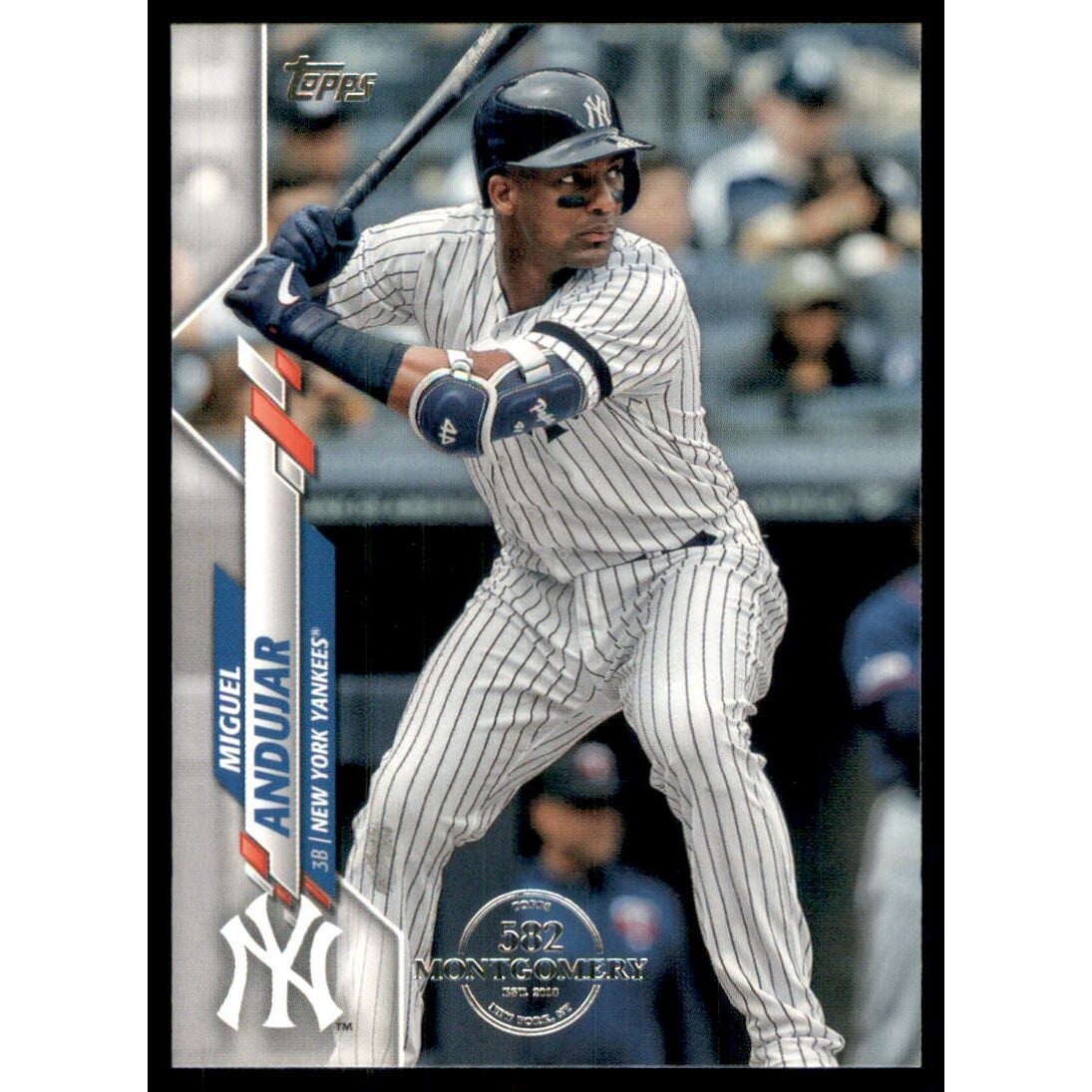
Miguel Andujar
"Miguel Andújar has spent his career answering a question that one great rookie season raised, and that injuries and roster crunches kept him from settling."
In 2018, Andújar finished second in American League Rookie of the Year voting, and the player ahead of him was Shohei Ohtani, which is about the hardest year in modern history to be a runner-up.
Andújar is now a veteran bat in San Diego, wearing No. 41, in a career that has shifted from prospect promise to proving that a hitter's skill can survive changes in team, position, and role. For anyone tracking depth bats in a long season, he is a case study in how a player is valued after the rookie glow fades.
The mainstream narrative treats 2018 as his peak and everything since as decline, but that framing ignores how often his path was shaped by injury, positional logjams, and defensive scrutiny rather than a loss of hitting ability. It also tends to forget that he reached the majors through the Dominican international signing system, which asks teenagers to become professionals before most Americans finish high school.
Japanese fans know 2018 as the year Ohtani arrived and took the Rookie of the Year award. The runner-up in that vote was Miguel Andújar, a Yankees third baseman from San Cristóbal, Dominican Republic, whose own rookie season would have been the story in almost any other year. For him, the Ohtani season is not a footnote but the most famous ceiling on his own recognition, and it ties his career permanently to a player Japanese readers consider their own.
American fans see Dominican players arrive in the majors and tend to treat it as a pipeline. What they miss is that many are signed as international amateurs at around sixteen, as Andújar reportedly was with the Yankees in 2011, so the first professional chapter often begins in a baseball academy in the Dominican Republic and not on a high school or college field. A debut at 22, as Andújar made in June 2017, comes at the end of years of development that US-born draftees spend in a very different system.
Miguel Andújar was born in San Cristóbal, Dominican Republic, in 1995 and reached the majors with the New York Yankees in 2017 after signing as an international amateur. His 2018 rookie season made him a star overnight, and the years since have been about durability, defensive questions, and finding a role. Now a right-handed designated hitter with the San Diego Padres, he represents the long, uneven middle of a baseball life.
| Year | Team | G | AVG | HR | RBI | SB | OPS |
|---|---|---|---|---|---|---|---|
| 2026 | SDP | 74 | .259 | 5 | 22 | 2 | .726 |
| 2025 | — | 94 | .318 | 10 | 44 | 1 | .822 |
| 2025 | CIN | 34 | .359 | 4 | 17 | 0 | .944 |
| Career | — | 541 | .279 | 58 | 245 | 15 | .751 |
Source: MLB Stats API · regular season
A Beginning in San Cristóbal
Miguel Andújar was born on March 2, 1995, in San Cristóbal, Dominican Republic. The public record shows that he became a Yankees signee as a teenager through the international amateur system, the route by which a large share of Dominican players enter professional baseball. That is where this profile has to be careful. No interviews or firsthand sources accompany this entry, so there are no verified stories to tell about his childhood, his family, or the daily routines that shaped him. What can be said is structural: a player who signs young, climbs through the minors, and debuts in the majors on June 28, 2017, has spent his formative years being evaluated. It is a life measured early and often.
The Season That Set the Terms
In 2018, his first full season, Andújar became one of the most discussed young hitters in the American League. He finished second in Rookie of the Year voting to Ohtani, and his doubles total was among the best in the league. The season did something quieter as well: it set a standard that every later year would be compared against. Rookie years like that can feel like a gift and a burden at once, because they define a player by what he did before the league adjusted, before injuries intervened, and before teams decided where he best fit. Inference here is fair, but only as inference: a hitter whose reputation was fixed so early probably spent years negotiating the gap between that reputation and his current role.
Many Dominican players sign with MLB organizations as teenagers rather than entering the draft. They typically develop in team-run academies in the Dominican Republic before moving to the US minor leagues. For American readers it helps to understand that this means a very different adolescence, with professional baseball starting where US prospects would still be in high school or college.
The Long Middle
What followed has been the less glamorous part of a major-league career. Andújar's path has included injury interruptions, questions about his defense at third base, experiments at other positions, and movement between organizations. None of this is unusual for a player in his position, and none of it is a verdict on his talent. Today he is listed as a designated hitter for the Padres, a role that strips the job down to the thing he has always been most noticed for: hitting. At 6 feet and 211 pounds, a right-handed bat who throws right, he is built for that kind of clarity, even if the road to it was not straight.
What Comes Next
At 31, Andújar is past the age at which scouts talk about projection and into the stage where value is measured by reliability and fit. That is a more honest way to evaluate a player, and perhaps a more forgiving one. The question is no longer whether he will become the star that 2018 hinted at, but what kind of hitter he is when the expectations have settled. For readers who followed him only through that one season, the more interesting story may be the one he is writing now: a veteran bat in San Diego, on his own terms, long after the vote that made him famous.
Finishing second in Rookie of the Year voting is a real honor, but it rarely carries the lasting recognition of winning. In Andújar's case, the winner was Shohei Ohtani, which makes the comparison unusually sharp for both American and Japanese audiences and helps explain why his strong rookie season is remembered as much for who beat him as for what he did.
For readers less familiar with baseball, a designated hitter bats but does not play the field. It is sometimes dismissed as a lesser role, but it often reflects a team's judgment that a player's bat is valuable enough to keep in the lineup every day, whatever his defensive position.
MLB Shop links matched to Miguel Andujar and the Cincinnati Reds.
Miguel Andujar Gear — Official MLB ShopThis profile was written by AI (Claude Sonnet) using publicly available sources. Interpretations and cultural notes are AI-generated and may not reflect the views of the player, their team, or MLB. This page contains affiliate links.