Travis Jankowski
"A left-handed center fielder who debuted in August 2015 and is still working the Triple-A grind in Syracuse at 35"
More than a decade after his August 21, 2015 big-league debut, Jankowski is listed with Syracuse, a reminder that a major league career is often a long series of arrivals and returns rather than a single ascent.
At 35, Jankowski sits at the point where a veteran outfielder's value depends on a very specific bet: that a team will want a defensive center fielder at the ready, not just a prospect still developing. With the 2026 season over, his next contract decision is the thing to watch.
Triple-A rosters are usually read as a list of prospects and castoffs, but veterans like Jankowski fill a different function: they keep a pipeline of major-league-ready depth available to the parent club. That role rarely shows up in a box score.
In Japan, a veteran on the 二軍 (farm team) usually stays inside one organization's structure. In American baseball, a 35-year-old at Triple-A like Jankowski belongs to a more fluid market. Veterans on minor league contracts commonly move between organizations, and such deals can include opt-out dates that let a player leave if no call-up comes. The Syracuse Mets are Triple-A, one step below the majors, but the player on that roster may be there by negotiation as much as by assignment. (This is general context about the system, not a documented detail of Jankowski's own contract.)
American fans tend to read a Triple-A assignment as a demotion. That reading misses how a veteran outfielder can be an asset to an organization. A center fielder who has already played in the majors gives the parent club a ready replacement, and gives younger teammates a daily example of how professionals prepare. Fans see the line 'Syracuse' next to a name and assume decline. The front office may see insurance.
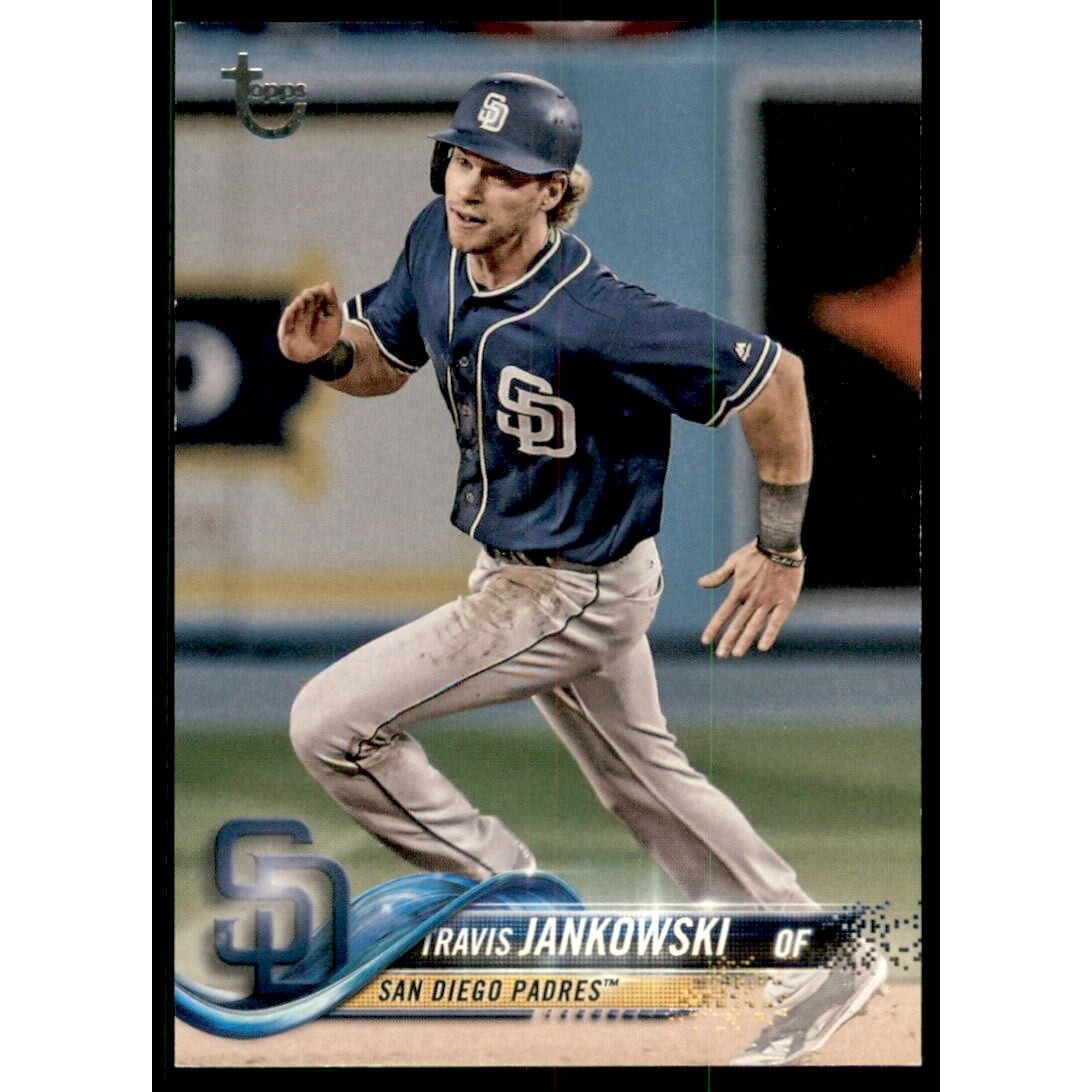
Travis Jankowski was born June 15, 1991, in Ephrata, and made his major league debut on August 21, 2015. He is a 6'3", 195-pound center fielder who bats left and throws right. He is currently listed with the Syracuse Mets. The public record on him is thin, and this profile covers only what that record supports: a career built around the unglamorous position of the veteran outfielder who keeps working across levels of the sport.
| Year | Team | G | AVG | HR | RBI | SB | OPS |
|---|---|---|---|---|---|---|---|
| 2025 | — | 26 | .244 | 0 | 2 | 2 | .575 |
| 2025 | NYM | 5 | .000 | 0 | 0 | 0 | .000 |
| 2025 | TBR | 14 | .258 | 0 | 2 | 2 | .617 |
| Career | — | 707 | .236 | 11 | 98 | 104 | .623 |
Source: MLB Stats API · regular season
What the record shows
The verified facts are plain. Travis Jankowski was born June 15, 1991, in Ephrata, USA. He stands 6'3" and weighs 195 pounds, bats left, and throws right. His major league debut came on August 21, 2015. He plays center field, and he is currently listed with the Syracuse Mets. No interviews, press releases, or news articles were supplied for this profile, so this entry does not describe his childhood, family, or private life. Those details would require sources we do not have, and it is better to leave them out than to invent them.
The position tells part of the story
Center field is the outfield's command post. The center fielder covers the most ground, calls off corner outfielders on balls in the gap, and sets the defensive tone for the other two. Teams have long valued players who can handle it, and the job often rewards range and judgment more than raw power. Jankowski's listed frame, tall and lean for the position, fits the profile of a runner who covers space. That is an observation about the position and his measurements, not a claim about his personality.
Triple-A is the highest rung below the major leagues. Rosters mix prospects approaching their debut with veterans who have already played in the majors. For a native fan, the key shift is to stop reading a Triple-A listing as a verdict and to see it as one position in a labor market where teams stock depth deliberately.
A career measured in arrivals
A debut date nearly eleven years in the past, paired with a Triple-A roster spot, describes a particular kind of baseball life. It is not the career arc most fans imagine, with its early breakout and steady climb. It is the longer, less visible path of the player who stays ready. Such players move between the majors and minors and are judged on whether they can step into a game on short notice and make the routine plays look routine. The box score rarely records that work, and the public record on Jankowski does not yet tell us how he thinks about it.
What remains to be told
The most honest thing to say about Jankowski is that his story is not fully on the record. A fuller profile would need his own words, in interviews about how he approaches the daily routine of a veteran outfielder, what he has learned about defense, and what the Triple-A seasons have meant to him. With the 2026 season finished, the question ahead is whether another club, or the Mets organization, brings him back to the center field role he has held for so long.
Within a defense, the center fielder is treated as its quiet leader. Because he sees the whole field in front of him and has the most ground to cover, teammates defer to him on fly balls. Listing someone as a center fielder says something about trust in his judgment as well as his speed.
MLB Shop links matched to Travis Jankowski and the New York Mets.
Travis Jankowski Gear — Official MLB ShopThis profile was written by AI (Claude Sonnet) using publicly available sources. Interpretations and cultural notes are AI-generated and may not reflect the views of the player, their team, or MLB. This page contains affiliate links.